If you have ever wondered what happens when brilliant hardware nerds gather in one place, arm themselves with soldering irons, caffeine, curiosity, and a badge that practically begs to be hacked, Hackaday Podcast 044: Supercon 2019 Special is your answer. This episode is not a polished studio monologue or a neat little “here are the headlines” roundup. It is something much better: an audio scrapbook from the floor of Hackaday Supercon 2019, a conference that felt less like a trade show and more like a weekend-long celebration of open hardware, creative engineering, and joyful technical chaos.
That is what makes this episode memorable. It captures the noise, the pace, the personalities, and the spirit of a conference where people do not just talk about building things. They actually build them, test them, break them, fix them, and then proudly show off the weird results to a room full of people who cheer for blinking LEDs with the same enthusiasm usually reserved for rock stars. In a world overflowing with slick tech content, this Supercon special feels refreshingly human.
What Is Hackaday Podcast 044 Really About?
At its core, this episode is a field report from Hackaday Supercon 2019. Instead of sticking to a conventional format, the show stitches together interviews, quick reactions, event-floor observations, and stories from badge hackers who were racing the clock before the final ceremony. The result is a lively collage of voices that gives listeners a front-row seat to one of the most beloved hardware gatherings in the maker world.
That approach matters. A normal podcast recap might tell you that Supercon had great talks, badge hacking, and a strong community vibe. Podcast 044 lets you hear those things in motion. You get the feeling of people leaning over tables, debating firmware choices, celebrating tiny wins, and laughing through the kind of last-minute debugging that can turn a calm engineer into a philosopher of despair in under seven minutes.
The beauty of the episode is that it does not pretend everything at Supercon is polished. In fact, the opposite is true. The podcast celebrates unfinished ideas, experimental builds, and the kind of enthusiastic tinkering that makes maker culture so compelling. That makes the episode more than an event recap. It becomes a snapshot of a community in its natural habitat.
Why Supercon 2019 Was Such a Big Deal
Hackaday Supercon has long built its reputation as a gathering for people who love hardware deeply enough to argue about connectors for fun. The 2019 edition raised the bar. Hosted in Pasadena, California, the event brought together hackers, builders, engineers, and makers for three days of talks, workshops, hallway conversations, and relentless badge hacking. This was not a passive audience conference. It was an active-participation arena.
Part of the magic came from the structure. Supercon had serious technical talks, but it also had community rituals that made the event feel different from a standard engineering conference. There was the famous badge hacking culture, the buzz around the Hackaday Prize, and the kind of hallway networking that often produces better ideas than a hundred corporate slide decks. “Hallwaycon” is not just a cute nickname here. It is practically a parallel curriculum.
By 2019, Supercon had also matured into a place where art, firmware, open-source tools, embedded systems, and hardware storytelling all collided in the best possible way. One minute you were hearing about RF, thermodynamics, or RISC-V. The next minute you were staring at a conference badge that looked like a handheld game console and realizing your weekend plans had just been replaced by “accidentally learn a whole new toolchain.”
The Badge Was the Star, and It Knew It
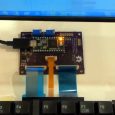
If Supercon 2019 had a celebrity, it was the badge. Not a cute little printed pass. Not a harmless blinking toy. This thing was a full-blown provocation. Built around an ECP5 FPGA and a RISC-V core, the 2019 Supercon badge came in a Game Boy-style form factor with a color LCD, multiple input buttons, and a cartridge system that opened the door to serious experimentation.
In other words, the badge was not content to sit around your neck and look decorative. It wanted your free time. It wanted your attention. It wanted you to look at open-source FPGA tools and say, “Sure, why not destroy my sleep schedule for science?”
This is one of the most important themes behind Hackaday Podcast 044. The badge was not simply swag. It was a platform. It invited software hackers, hardware hackers, FPGA tinkerers, and curious newcomers into the same playground. That is rare. Many conference badges are fun novelties. The 2019 Supercon badge was more like a dare disguised as event merchandise.
The podcast leans into that energy. As attendees discuss what they managed to build, what nearly worked, and what spectacularly refused to cooperate, listeners get a sense of why this badge became such a focal point. It rewarded ambition, but it also celebrated effort. At Supercon, even modest badge hacks mattered because the point was not perfection. The point was participation.
Open Hardware, RISC-V, and the Spirit of Experimentation
Another reason this episode still resonates is that it arrived at a moment when open hardware and RISC-V were generating serious momentum. Supercon 2019 leaned into that future. The badge itself reflected it, the talks reflected it, and the community absolutely reflected it. Hackers were not just talking about open tools in theory. They were using them, extending them, and showing what could happen when barriers to experimentation started to fall.
That matters for SEO readers looking for context around Hackaday Supercon 2019 because the episode captures a wider shift in hardware culture. This was not just a cool weekend for people who like solder fumes. It was part of a broader movement toward accessible, transparent, remixable hardware development. When a conference badge can inspire Linux-on-badge dreams, FPGA hacks, custom cartridges, and a flood of inventive side projects, you are no longer dealing with passive fandom. You are dealing with a thriving ecosystem.
And yes, it helps that the talks were strong. The 2019 program included presentations on topics ranging from RF and natural electronic art to circuit sculpture and thermal design. That variety reinforced a central Supercon truth: hardware is not one discipline. It is a conversation between engineering rigor, practical problem-solving, design creativity, and stubborn optimism.
The People Are the Point
One of the smartest things about Podcast 044 is that it treats the community as the real headline. Hackaday staff voices help shape the episode, but the special guests and badge hackers give it emotional texture. You hear from people who made ambitious builds, people who kept things delightfully simple, and people who probably learned more in a few frantic hours than they would in weeks of reading alone.
This is where the episode transcends event coverage. A lot of content about maker conferences focuses on gadgets first and humans second. Podcast 044 reverses that. The badge is cool, the talks are cool, the technical platform is cool, but the real story is that a room full of people decided to build together. Some arrived as experts. Some showed up with curiosity and a blinking LED. At Supercon, both were valid.
That welcoming attitude is not a small detail. It is one of the reasons Hackaday’s community has such staying power. The culture does not only celebrate the polished final demo. It celebrates the attempt. It celebrates the failure that taught you something. It celebrates the person brave enough to step on stage and say, “I know it only blinks, but I made it blink.” In engineering, that first blink can be the gateway drug.
The Hackaday Prize Added Real Stakes
Supercon 2019 was not all hallway fun and badge glory. It also hosted the Hackaday Prize ceremony, giving the weekend a sense of bigger stakes. The 2019 grand prize went to FieldKit, an open-source modular sensor platform designed for research in harsh environments. That win reinforced another key idea running through the Supercon universe: clever hardware is great, but impactful hardware is even better.
That backdrop gives Podcast 044 additional depth. The conference was playful, yes, but it was also serious about the future of engineering, product development, and open-source innovation. Supercon manages to live in that sweet spot where wild prototypes and meaningful real-world applications can stand side by side without anyone feeling weird about it. That balance is one reason the event continues to matter to hardware professionals and hobbyists alike.
Why This Podcast Episode Still Works Years Later
Some event episodes age badly because they depend too much on “you had to be there” energy. Hackaday Podcast 044: Supercon 2019 Special avoids that trap. It still works because it captures timeless things: collaborative problem-solving, creative risk-taking, technical curiosity, and the joy of watching people get excited about building. Those ideas do not expire.
It also helps that the episode documents a very specific moment in the history of modern maker culture. The 2019 badge represented a bold hardware direction. The talks reflected a rapidly evolving open-hardware ecosystem. The event itself showcased a community that was equally comfortable discussing thermodynamics, artful electronics, embedded software, and practical hacking workflows. If you want to understand why Supercon has such a devoted following, this episode is an excellent place to start.
For listeners, the value is simple: it feels immersive. For readers, the value is broader: it reveals how Hackaday has built an identity around making advanced technical ideas feel participatory instead of intimidating. That is harder than it sounds. Plenty of publications cover hardware. Hackaday has always been better at making hardware feel alive.
What the Episode Says About Hackaday as a Brand
Podcast 044 is also a quiet branding masterclass. It shows Hackaday at its best: curious, technical, community-driven, a little scrappy, and entirely unafraid to mix high-level engineering with cheerful weirdness. There is no corporate stiffness here. No sterile “innovation solutions platform” language. Just real people making interesting things and talking about them with contagious enthusiasm.
That authenticity matters online. Search engines may love structure, keywords, and clean formatting, but audiences love voice. This topic works so well as long-form content because it sits at the intersection of maker culture, engineering storytelling, conference reporting, and open-source hardware history. The best article about it cannot sound like a vacuum-sealed summary. It has to sound like someone actually walked through the room and came back smiling.
Extra Reflections: The Experience of Supercon 2019
Imagine walking into Supercon 2019 with the innocent belief that you will “just attend a few talks.” Very cute. Within minutes, that plan dissolves. Someone is already showing you a badge mod. Somebody else is arguing that your current workflow for embedded debugging is tragically outdated. A third person, who looks suspiciously sleep-deprived in the most trustworthy way possible, is explaining why an FPGA badge in a handheld shell is the only socially acceptable way to spend a weekend.
The room hums with that special conference electricity that does not come from the wall outlets, though there are certainly plenty of people fighting over those too. Tables become workbenches. Workbenches become social circles. Social circles become impromptu tutorials. You look down for one second and realize your coffee has gone cold because you have spent twenty minutes staring at someone’s elegant hack that uses exactly three extra parts and an outrageous amount of nerve.
What makes the experience unforgettable is how democratic the excitement feels. At many tech events, the spotlight belongs to the people on stage. At Supercon, the spotlight leaks everywhere. It spills into hallways, badge tables, lunch conversations, and those gloriously messy group debugging sessions where five people gather around a half-working device like it is an archaeological discovery. The tone is not “prove you belong.” It is “pull up a chair and show us what you’ve got.”
Then there is the emotional roller coaster of badge hacking itself. One minute, you are convinced your idea is genius. The next, the code refuses to cooperate, the signal is doing something cursed, and the solder joint you trusted has betrayed you personally. But then a nearby hacker glances over, offers a suggestion, and suddenly the whole thing springs to life. That tiny moment of success feels ridiculously good. Not because the project is world-changing, but because the process is shared.
And that may be the real legacy behind Hackaday Podcast 044: Supercon 2019 Special. It captures a place where technical ambition and human generosity meet. The experience is not just about hardware. It is about permission: permission to try, to fail, to laugh, to improvise, to ask dumb questions, to build something gloriously impractical, and to cheer when it finally works. That is why the episode still lands. It is not merely documenting a conference. It is documenting what it feels like when a creative engineering community is completely, wonderfully alive.
Conclusion
Hackaday Podcast 044: Supercon 2019 Special is more than an episode title and more than a conference recap. It is a compact portrait of what makes the Hackaday ecosystem so compelling: technical seriousness without pretension, experimentation without fear, and a community that treats curiosity as a feature rather than a flaw. Supercon 2019 had the talks, the badge, the prize ceremony, and the crowd energy to make it memorable. Podcast 044 turned all of that into a format you could hear, feel, and revisit long after the solder fumes cleared.
If you care about Hackaday Supercon, open hardware, maker culture, RISC-V, FPGA badge hacking, or just the rare joy of listening to smart people enthusiastically build strange things together, this episode earns its place as a tiny time capsule from a very good weekend.
Note: Source links have been intentionally omitted for web-ready publishing, and any unnecessary reference artifacts have been removed as requested.